Wednesday, 27 June 2012

Artist's Uncovered: Olivia Irvine

Our ‘Artist Uncovered’ for June is Scottish painter and artist Olivia Irvine. Irvine’s work is a fascinating inclusion in the Art in Healthcare’s collection. One part is due to her art, which I’ll discuss in a moment; the other is that her professional and artistic career combines art with healthcare. Initially she pursued a career in medicine, studying and volunteering as an auxiliary nurse during the summer months; however after realising where her true passion lied she switched to study drawing and painting at the Edinburgh School of Art. The experiences she had while working and studying in medicine gave her a real interest in issues involving art and healthcare institutions.

Irvine paints a whole manner of different situations and draws from inspiraion from across the world. The three paintings in Art in Healthcare's collection are all inspired by gardens. Each one is an image of the outside world which contains its own unique metaphor. For example ‘Kite flying’ is a symbol of freedom. The monoprint depicts the idyllic scene of two children flying a kite in a lush green field. It is an uplifting and bright image that allows for nostalgic response as it reflects an enjoyable children’s pastime.


Kite Flying
Olivia Irvine

‘How does your garden grow’  is a rather intriguing image, an insight into the artist’s memory as she paints a scene from her early childhood. The landscape here is one she used to spend time in as a little girl and the painting explores how the centre piece of that landscape changed from a sandpit to a flower bed. The painting is abstract and multilayered with different tones and shades, playing on light vs. dark. The feelings she explores with this image are this idea that landscape can grow and change simultaneously to us growing up and changing as people.

 ‘I want to invoke a psychological response’

How Does Your Garden Grow
Olivia Irvine

‘Another metophoric painting of Irvine's we have in Art in Healthcare's collection is 'The heat of the moment’ . This simple painting of a young tree surrounding by a metal protector acts as an artistic metaphor for protecting oneself against adversity. This is my personal favourite image out of the three as I feel it perfectly sums up Irvine’s artistic inspiration and practise. She takes a simple and familiar landscape and creates a pictorial language that conveys a comforting and positive dialogue. I believe this is one of the many reasons her work is so suited to Art in Healthcare.
The Heat of the Moment
Olivia Irvine

Olivia Irvine’s paintings are colourful and interesting additions to healthcare settings. They invoke an optimistic and affirmative message that is so important when being exhibited in spaces that may traditionally hold negative connotations. Irvine's relatable and familiar pictures are a very welcomed addition to both the Art in Healthcare collection and the healthcare settings they are displayed in.
 
‘It is great for patients, visitors and staff. It makes the place looked cared for.’

Tuesday, 12 June 2012

Hard Rock Cafe: Dining with Art in Healthcare

In recognition of the National Volunteer’s Week from
1st - 7th June, Art in Healthcare were treated to a special evening hosted by the Hard Rock Café in Edinburgh. The HRC provided a fantastic complimentary dinner for some of Art in Healthcare’s dedicated volunteers and thanks to the outgoing and friendly restaurant staff, the evening was a great success.  
Art in Healthcare's team of volunteers


Not only was it an amazing gesture of thanks to all of the hard graft the volunteers have put in over the last couple of months, but it was also an opportunity for Art in Healthcare’s volunteers to meet one another and see the diverse and interesting community who contribute to the charity and its work.


At Art in Healthcare we rely on our volunteers to help out with a number of projects, from restoring paintings, to hanging pictures, and carrying out fundraising talks. If you’d like to get involved in our volunteer programme and think you have something to offer Art in Healthcare then please get in contact with our Outreach Manager, Amelia on outreachmanager@artinhealthcare.org.uk.

We would like to thank the team at Hard Rock Café for their generosity and a fantastic night and hope to do another event for our dedicated volunteers soon.

Wednesday, 30 May 2012

Callum Innes: Works on Paper Fundraising Event


On 8th May 2012 Art in Healthcare hosted a hugely successful fundraising evening at the Ingleby Gallery with the  internationally recognised Scottish artist, Callum Innes, giving a tour around the gallery and his paintings currently on show. Innes studied at Grays School of Art in Aberdeen before going on to establish his own style of reductive painting. He was nominated for the Turner Prize in 1995 and later went on to win The Jerwood Painting Prize in 2002.


Walking into the Ingleby Gallery I had no idea what to expect from Callum Innes’ latest exhibition. As a relative ‘newbie’ to contemporary art myself I was looking forward to hearing about the thoughts and processes which go behind his modern, minimalist style.


Innes’ work is often very bold and intense, making use of statement colours and shapes to draw emotion out of the audience - a complete contrast with the artist himself who was very soft spoken and eloquent as he addressed the 20 or so people gathered in the gallery with a great passion for his work and craft. Everyone attending the evening’s fundraising event was pinned on his every word as Innes described his beginnings as an artist, his old college tutors, anecdotes of artists he had worked with, and parts of his life which had inspired his own art. 


“All these works are fragile, emotionally, physically…and (they) retain a human fragility about them. They’re imperfect; if they were perfect they wouldn’t work”


Untitled No 33, 2011
Oil on Canvas


He told us how he regularly finds himself throwing work away and how he is somewhat of a perfectionist. Once out of the studio or exhibition context he regularly sees his work in a completely different light and often discards it completely. He once worked with curator Marco Livingston on a run of 50 books which were to be beautifully letter pressed and each covered with an individual painting. However, when the time came to wrap the books, it was discovered the paintings had been cut down 2cm too short and were therefore unusable. Innes immediately went up to his studio, gathered pictures which had been displayed in the Tate and in the ICA, and cut them all down to the correct size, destroying 30 paintings to make 50 books.


“It was about trying to achieve perfection. I learnt in that process of looking at your work and making decisions about it. I learnt how to edit, which is something you can only really learn through time, and I’m still learning.”


The ‘Works on Paper’ exhibition at the Ingleby Gallery fundraising event was filled with paintings focussing on what had been taken away from the painting, what wasn’t on the page, and what had been left behind, rather than what had been created by the paint. Innes described how when painting onto wax paper, turpentine made certain parts disappear and it was this in which he was most interested


Untitled, 2008
Oil on wax paper


Having been a figurative painter until his early 20’s Innes told us how he slowly worked the figure out of the painting but still kept the gesture and the marks to make paintings as objects. The small series of squares which were displayed on the upper level are an example of this. Two blocks of colour had been painted over each other  freehand to create a semi-transparent look. The result is wonderfully effective and the bold colours oozing out the side of squares really draw in the eyes of viewers.


Quinacridone Violet / Lemon Yellow, 2012
watercolour on paper


“In all the paintings I make there is always a single line that goes through the painting; there’s a moment where the canvas is filled with oil paint and I take a line from the bottom to the top of the canvas so it doesn’t meander, it looks like its formed naturally but it’s controlled, picked out very delicately and it forms itself at a certain point.”


 Innes’ work will be displayed in the Ingleby Gallery until 14th July 2012 and I highly recommend you make a trip along. Seeing the different layers and textures of the paint on the paper, and understanding the form and gesture of each painting gave me a much greater admiration for contemporary and abstract artists. Innes has also kindly donated two pieces of his work to Art in Healthcare’s collection, one of which will be displayed in the new Royal Victoria Building at the Western General Hospital along with a large selection of other fantastic artworks from our collection which we have just recently hung there.

Wednesday, 9 May 2012

‘ARTISTS UNCOVERED’: Heather Pugh

My name is Melissa and I am a post graduate student at the University of Edinburgh with my academic interests focusing on art, design, history and culture. I became involved with Art in Healthcare as I’m passionate about getting art out of the gallery and into the community. This is the first blog post for an exciting new project entitled ‘Artist’s Uncovered,’ where Abi Allsopp (AiH's new Media Manager) and I will highlight an artist and their work belonging to the Art in Healthcare collection. The project aims to increase awareness of the various and exciting artworks on display in health and care settings through a bi-monthly blog paired with a video showcasing the chosen artist for that month. Furthermore it enables me to explore why artists are attracted to the charity and how they feel about exhibiting their creations outside a more traditional gallery setting.  

Off the Cuff
 
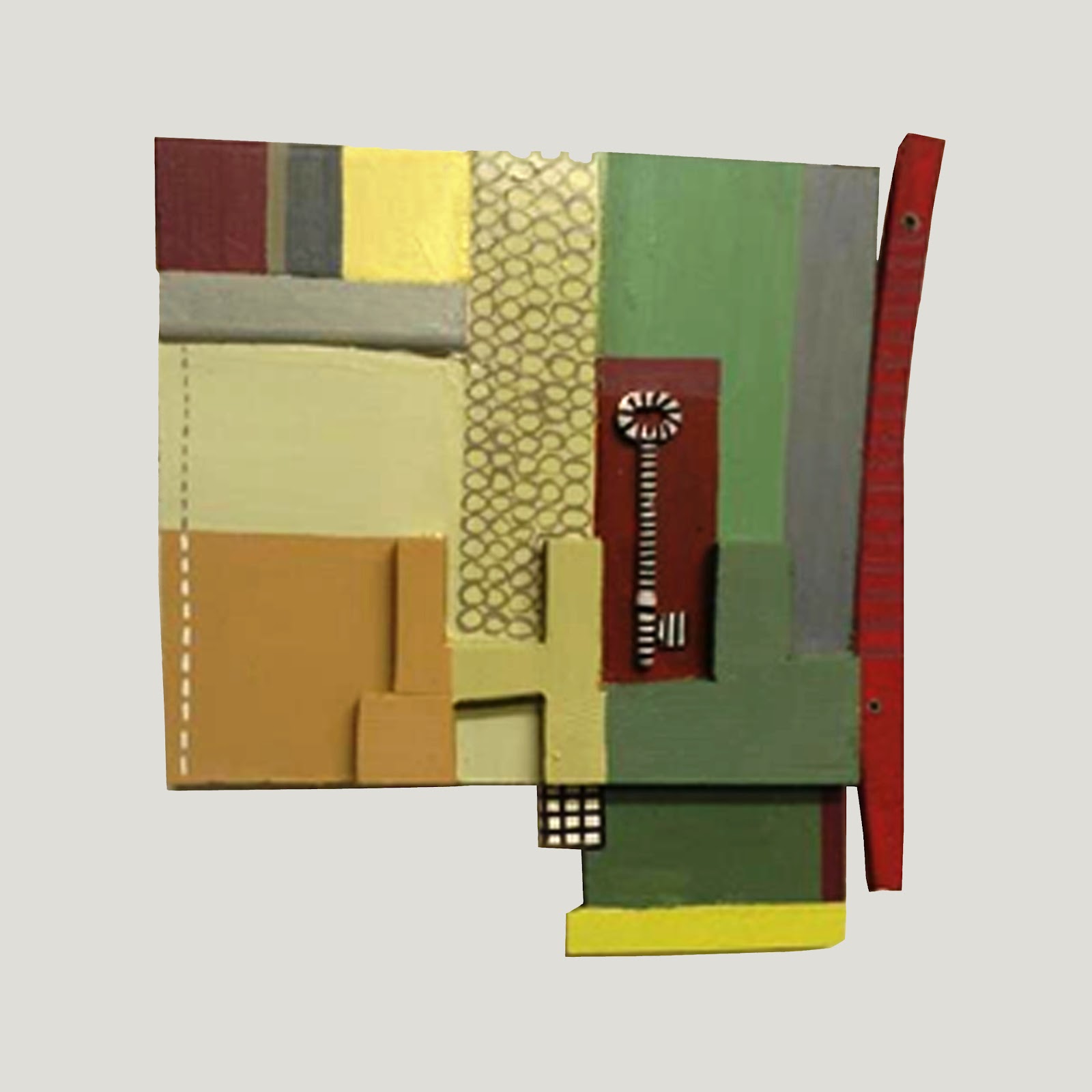
Heather Pugh’s sculptural artworks are fantastic additions to the charity’s art collection and are already earmarked to be put on display in Edinburgh’s new Royal Victoria hospital with generous financial support from the Hope Scott Trust. Her paintings are bright, colourful and quirky, illuminating warmth and cheerfulness. Each of her creations is completely original and could not be replicated as she utilises objects discarded in bins or found on the city streets. She then arranges these found objects, adding or cutting away at them before applying paint and sometimes other media to create multi-layered and intriguing artwork. Her inspiration stems from the things she finds, taking something ordinary with a defined purpose to establish something new and completely unique.
‘To be blunt my work is almost like glorified recycling’
Ten of her works have been purchased for the AiH collection to be displayed at the hospital and my favourite is ‘Off the Cuff.’ The colours make up an attractive palette: contrasting and bold yet still working together and with the multiple components making the piece visually stimulating. Firstly, there are everyday mundane objects such as a hinge and a door handle, which are painted over in geometric pattern and stripes transforming the lowly door handle into a decorative adornment. Pugh is interested in hinges because of their use and function; they are designed to open and close doors and compartments but by placing them in an alien environment their function changes completely.
Another exciting piece is ‘Sign of the Times,’ which drew my attention by incorporating a key initiating me to ponder where the item originally came from and did the owner miss it. Is whatever the key used to unlock unable to open now? The idea for the painting was inspired by Pugh playing with a piece of wood on her jigsaw, which then developed and expanded after a friend gave her some unwanted objects, including the keys.
‘A key is something every day and by changing its function it tied in with my theme of recreating the mundane.’

Sign of the Times

‘Every Nook and Cranny II’ was also motivated by Pugh’s jigsaw and relates to a piece she made the year before that shares a similar colour palette. The aspect that really interests me in this painting is how she cuts away at the artworks surface, revealing new layers and sometimes completely exposing the wall behind. The manipulation has been made through the addition of enamel and acrylic paints and removing pieces of the jigsaw puzzle and wood.
These artworks are exceptionally enjoyable to look at and emit a positive energy that patients, staff and visitors will greatly appreciate. Most people who need to spend time in a hospital would likely rather be anywhere else and as these environments can be quite dreary, clinical and even a little scary, colourful and uplifting artworks like Pugh’s can make such a difference. Hospitals hold many negative connotations, yet the aim of a charity like Art in Healthcare is to make places like these more pleasant and welcoming. Furthermore, Pugh hopes that her artworks will have a significant therapeutic and affirmative effect on patients’ wellbeing and happiness, as she describes below:
‘Art in Healthcare is a great way to add colour and atmosphere into hospitals, providing a type of therapy for people going through often and anxious circumstances, Things visual are often memorable in our minds eye, and I think it’s great to have art work in hospitals, which are often associated with negative times. If my work can portray any positive emotion in people, and make people smile for a moment, it’s a job well done.’

Every Nook and Cranny II


Feel free to leave a comment and tell us what you think of Heather’s work or what we're doing here at Art in Healthcare. Cheers!

Friday, 20 April 2012

Spotlight on Leuchie House

Leuchie House, North Berwick
Deciding where to go on holiday is one of those tasks that most adults probably spend much time fantasising about! However for someone who suffers long term physical difficulties finding that perfect getaway is a challenging undertaking, for the simple reason that there are few resorts that understand or are able to cater for their daily needs.
Leuchie House is a unique organisation is Scotland. It is more than just a care home, as it enables guests who require high dependency care a chance to have a real getaway. They go that extra mile by tailoring each person’s stay to their medical and care requirements as well as taking into account their personal tastes. It offers everything from physiotherapy to acupuncture, cooking lessons to excursions to local places of interest and culture.

Hew Dalrymple (1690-1755),
Allan Ramsay, 1754
You cannot write about Leuchie House without mentioning the building itself. It’s a stunning 18th century mansion situated in the pretty outskirts of North Berwick. The site was brought by the distinguished Hamilton-Dalrymple family in 1699, yet the house that now stands was built in 1780 upon the foundations of the building that was originally there. The family were powerful figures in the Scottish legal system and they spent a significant amount of their finances building the archetype of fashionable Georgian interior design.


Dandelion and Burdock,
Linda Jackson, 1993
 
 
Leuchie House has recently acquired 20 paintings from Art in Healthcare’s collection. These images are now the focus of the art talks lead by Sally Forsyth, as part of the activity programme advertised at the house. The paintings vary in subject, artistic styles and mediums in an effort to appeal to a wide variety of tastes. The feedback from the participants of the talks suggests that the guests thoroughly enjoy engaging and gaining new insights into the surrounding imagery.


One of the favourite paintings is Linda Jackson’s ‘Dandelion and Burdock,’ which due to its size and prominent position in the Leuchie House waiting room has received much attention from visitors and staff. The image is of an abstract style and is distinctive with its fluid paint strokes and bold colours that juxtapose a stark white backdrop. Yet the painting that really captured my attention is Michael McVeigh’s lithograph of the Grassmarket. It portrays a popular and recognisable Edinburgh attraction, but McVeigh makes the scene his own by infusing the landscape with his own perceptions and fantasy. He paints in a reverie way that draws the viewer in, transforming the familiar into something new and exciting.
Grassmarket, Michael McVeigh, 1992
Art in Healthcare’s involvement with Leuchie House has had a significant role, as the artwork plays a vital part of making it a vibrant and interesting place to be.

Click here to visit the Leuchie House website

Thursday, 5 April 2012

Questioning the Current Climate

As the flurry of snow came and went yesterday following the scorching rays of sun last week, many of us have come to question what is actually going on in today’s climate.
Equally, here at Art in Healthcare, we are taking a step back and having a closer look at the ‘climate’ of the arts and health field. We are wondering how many of the remaining artworks in our store we can look at renting out across Scottish healthcare settings and we are questioning whether people truly value the benefits, quite literally, of art in healthcare.
Many of you will have been in a Hospital, Care Home, Hospice or other healthcare setting whether as a patient, resident, visitor or even staff member and I would imagine that most of you will have noticed, if only to a small degree, the general appearance of the place, the decoration, the wall coverings.. Some of the places may have had artworks on the walls, such as posters, paintings or photographs, while other places might just have blank, empty walls with the occasional noticeboard.
Imagine now, if you will, healthcare settings whose walls are adorned with high-quality artworks – a feast for the eyes, visual stimulation; images that remind you of past holidays, good-times and friends; scenes that transport you to a place that is quiet and still. How do you think a patient’s long trip to the operating theatre might be improved by the glimpse of brightly-coloured paintings on the corridor walls around them? What do you think about a Care Home resident surrounded by comforting artworks in the sitting room where they spend most of their waking hours as something to look at, to muse on, to stimulate their mind? What else could cheer up a visitor to a Hospice, waiting nervously to see their relatives, such as a calming artwork on the wall in front of them? Surely this serves to illustrate that art is part of healthcare, that artworks can substantially improve the ‘quality of life’ of viewers?
This is exactly our vision at Art in Healthcare where we seek to ‘improve the environment of Scottish Hospitals and Health Centres so that the quality of life for patients, staff and visitors is improved’. We aim to do this by renting out high-quality contemporary Scottish artworks to healthcare settings so that they may enliven, transform and ‘warm up’ these otherwise often cold and unfriendly places.
In today’s world, the benefits of arts in the health field are widely recognised – for example, the increased role of the Art Therapist in treatment provision, the wide number of mental health charities that are launching creative arts projects and the far-reaching work of Voluntary Arts Scotland who passionately promote the participation of people in arts and crafts for the benefit of their health.
What remains then is for this recognition of the benefits of art in healthcare to be taken further. At a time when the phrase, ‘funding cuts’ is rife and healthcare services are attempting to streamline their services, Art in Healthcare, and anyone out there who follows our cause, need to keep flying our flag and remember that small things, such as artworks, can often make a big difference to a person’s quality of life.
So, the next time you find yourself in a healthcare setting with a blank wall, ask yourself what difference having an artwork would make to the space. What sort of image would you like to see there and how might this then make you feel? Better still, ask a member of staff whether they have considered putting up artworks there and you never know, they might even want to hear about what we have to offer at Art in Healthcare…
Please see www.artinhealthcare.org.uk for full details of the services that we provide.

Wednesday, 8 February 2012

Gallery on the Corner Event


Come along to the Gallery on the Corner Tuesday, 21 February 6:30pm for a glass of wine, a presentation from the Gallery’s Director on its work, a lesson in origami and the chance to win one of our wonderful raffle prizes!

All welcome

Free Entry – includes a glass of wine. Donations appreciated.

Raffle tickets on sale before and during the event. £1 for one or five for £3.


Raffle prizes include:

- A night's stay in the Hilton Hotel, Glasgow
- Family ticket to the Scotch Whiskey Experience
- 2 film tickets to the Filmhouse
- Membership to the National Gallery
- Membership to the Royal Scottish Academy
- Annual membership to Art in Healthcare
- Tickets to your event of choice at the Liquid Rooms

... And more!

Click <<HERE>> to for more details on our Facebook page.